Introduction
Podcasting looks simple from the outside. A microphone. A conversation. An upload.
The reality is different. Every episode creates a long trail of work. Planning. Research. Notes. Editing. Publishing. Promotion. Then doing it all again next week.
Most podcasters don’t quit because recording is hard. They quit because everything around the recording piles up.
This is where a custom GPT can help. Not as a shortcut. Not as a replacement for your voice. As a support system for the parts of podcasting that repeat whether you enjoy them or not.
This article breaks down what a custom GPT actually does for podcasters, where it helps the most, where it does not, and how to use one without turning your show into generic content.
No hype. No theory. Just practical use.
What “Custom GPT” Means in Real Life
A custom GPT is not just “AI with better prompts.”
It is an assistant trained on:
- Your show’s purpose
- Your audience
- Your tone
- Your formats
- Your constraints
That training matters more than the model itself.
Most people try AI like this:
They open a chat, type a vague request, and hope for a usable response. Then they rewrite half of it or give up.
A custom GPT flips that relationship.
Instead of explaining your show every time, the GPT already knows:
- What your podcast is about
- How long your episodes usually run
- Whether you do interviews or solo episodes
- How direct or casual your tone is
You stop teaching the tool. You start using it.
For podcasters, that difference determines whether AI becomes part of the workflow or something you abandon after a week.
Why Podcasters Feel Overworked Even With “Simple” Shows
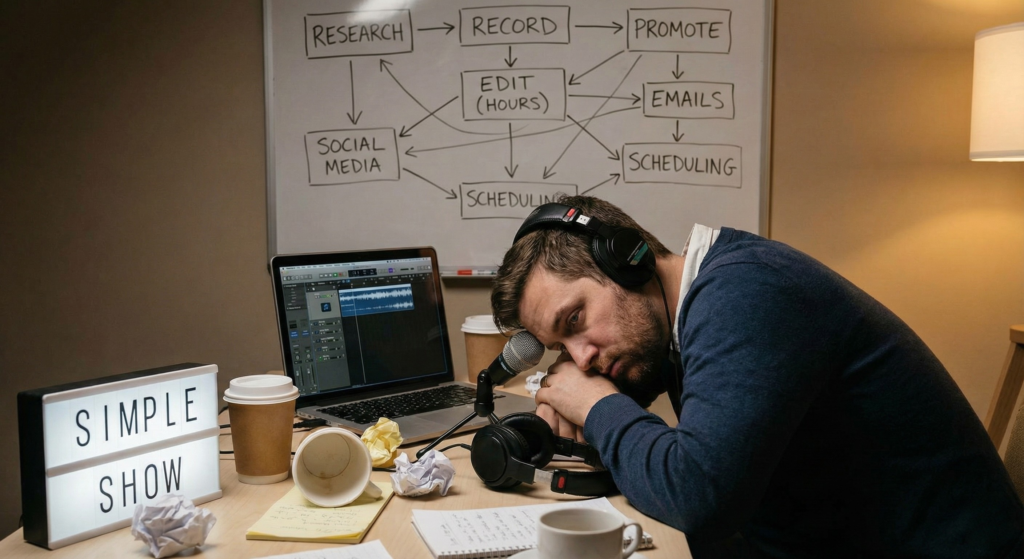
Before getting into features, it helps to name the real problem.
Most podcasters are not overwhelmed by creativity. They are overwhelmed by repetition.
You:
- Plan episodes in similar ways
- Write the same types of notes
- Promote every episode across the same channels
- Answer the same listener questions
None of that work is hard on its own. It is draining because it never ends.
A custom GPT helps when:
- The work repeats
- The decisions are predictable
- The output needs to be consistent
It does not help when:
- Judgment matters
- Original thinking matters
- Personal experience matters
Understanding that line keeps expectations realistic.
Episode Planning Without Starting From Zero Every Time
Most shows stall at the same point.
You know what your podcast is about. You even have ideas. But when it’s time to plan the next episode, everything feels fuzzy.
A custom GPT can support planning in three practical ways.
1. Turning themes into episode angles
If your show has a clear theme, your GPT can generate episode angles that fit it.
Example.
You run a podcast for freelance designers. Your theme is pricing, client relationships, and sustainable work.
Instead of asking, “What should I talk about next?” you ask:
“Give me five episode angles about raising rates that fit a 25-minute solo format.”
The GPT responds with focused angles, not generic advice. You choose one. Planning moves forward.
2. Matching your established format
If your show follows a pattern, a custom GPT learns it.
For example:
- Intro
- Context
- Three main points
- Closing takeaway
When you ask for an outline, the GPT uses that structure automatically.
That matters because structure reduces cognitive load. You are not reinventing the wheel. You are filling it.
3. Avoiding accidental repetition
Over time, many podcasters repeat themselves without realizing it.
A custom GPT trained on your episode list can flag:
- Topics you covered recently
- Angles that sound too similar
- Questions you already answered
This does not replace your judgment. It acts as a memory check.
Research Support That Doesn’t Hijack Your Voice
Research is useful. Over-research is paralyzing.
A custom GPT helps by narrowing, not expanding.
It can:
- Summarize background information
- Pull key talking points
- Clarify definitions
It should not:
- Write opinions for you
- Add hot takes you don’t believe
- Decide what matters
Example.
You are recording an episode about audience growth. You want to reference common mistakes without sounding preachy.
You ask your GPT:
“Summarize the three most common podcast growth mistakes without tactics.”
You get a clean summary you can react to in your own words.
The GPT sets the table. You have the conversation.
Show Notes That Don’t Feel Like Punishment
Show notes are one of the biggest friction points in podcasting.
They matter for:
- Listeners
- SEO
- Platforms
But writing them from scratch after every recording is exhausting.
A custom GPT helps in specific, limited ways.
Turning transcripts into readable notes
Raw transcripts are messy. A GPT can:
- Remove filler
- Group ideas
- Create clear sections
The key is training it on examples you like.
If you show it:
- Your preferred length
- Your tone
- Your formatting style
It produces notes that need light editing, not a full rewrite.
Pulling timestamps and key moments
For longer episodes, this alone can save time.
A custom GPT can identify:
- Segment transitions
- Key quotes
- Topic changes
You review, adjust if needed, and publish.
Writing summaries that sound human
Generic summaries kill trust.
When the GPT is trained on your past summaries, it learns:
- How direct you are
- How much context you give
- What you leave out
That is the difference between “AI wrote this” and “this sounds like the show.”
Titles That Balance Clarity and Curiosity
Episode titles are deceptively hard.
Too vague and no one clicks.
Too clever and no one knows what they’re getting.
A custom GPT helps by narrowing the range of bad options.
It can:
- Generate multiple title styles you already use
- Avoid phrases you dislike
- Keep titles aligned with episode content
Example.
Your rule is:
“No clickbait. Clear beats clever.”
Your GPT generates titles that:
- Name the problem
- Hint at the outcome
- Stay under your preferred length
You still choose the final title. You just start with better options.
Promotion That Stops Feeling Like a Second Job
Promotion burns out more podcasters than editing.
Not because promotion is difficult. Because it repeats every week.
A custom GPT shines here because repetition is the job.
Social posts from a single source
Once trained, your GPT can:
- Turn one episode into platform-specific posts
- Adjust tone for LinkedIn, Twitter, or Instagram
- Reuse phrasing patterns that already work
You are not asking it to invent marketing. You are asking it to adapt.
Consistent episode announcements
Most podcast promotion looks the same week after week.
That is not a problem. Inconsistency is.
A custom GPT ensures:
- The same core message
- Familiar structure
- Your voice
You scan, tweak, and post.
Email and Newsletter Support Without Losing Trust
If you run a podcast newsletter, trust matters more than polish.
Readers notice when something sounds off.
A custom GPT helps by learning your email habits:
- How long you write
- How personal you get
- Where you put links
It can draft:
- Episode announcements
- Weekly rundowns
- Short intros
You edit lightly. Your voice stays intact.
Repurposing Episodes Without Squeezing Them Dry
Most podcasts have a back catalog that never gets reused.
That is wasted value.
A custom GPT can:
- Identify evergreen episodes
- Suggest when to resurface them
- Rewrite descriptions for new listeners
This is not about flooding feeds. It is about making past work visible again.
Workflow and Admin Support That Adds Up Over Time
Beyond content, podcasters make dozens of small decisions every week.
A custom GPT can support:
- Guest outreach emails
- Follow-up messages
- Internal checklists
- Publishing steps
Each task saves minutes. Together, they save hours.
Where Custom GPTs Don’t Help Podcasters
This matters more than features.
A custom GPT will not:
- Make a boring show interesting
- Fix unclear thinking
- Replace lived experience
It also should not:
- Write full scripts if you value natural delivery
- Generate opinions you don’t hold
- Decide the direction of your show
If you hand over creative control, quality drops. Fast.
The value is support, not substitution.
How to Set One Up Without Overengineering
You do not need a complex system.
Start with:
- Your show description
- Three episodes you are proud of
- Clear rules about tone and length
Then add:
- Show note examples
- Promotion templates
- Repeated instructions
If it saves you time once, it works.
If it saves you time every week, it’s worth keeping.
Who Custom GPTs Are Best For
Custom GPTs make the most sense for podcasters who:
- Publish consistently
- Care about clarity and quality
- Want systems without losing control
If your show is occasional or experimental, the setup may not pay off yet.
Closing
A custom GPT is not a growth hack.
It is an operational tool.
For podcasters, that matters. The work around the microphone often takes longer than the recording itself.
Used well, a custom GPT shortens that work without changing what makes your show yours.
That is usually enough to keep a podcast going longer.
And longevity is where real results come from.
FAQ Section
What is the main benefit of a custom GPT for podcasters?
It saves time through consistency. It handles repetitive planning, formatting, and promotion work without changing your voice.
Do I need technical skills to use a custom GPT?
No. You need clear examples and rules. The setup is about decisions, not coding.
Will a custom GPT make my podcast sound generic?
Not if you keep creative control. Use it for support tasks, not opinions or scripts.
Is a custom GPT useful for interview podcasts?
Yes. It helps with prep, summaries, show notes, and promotion, not the interview itself.
What should I give a custom GPT to make it useful?
Your show description, strong past episodes, and clear rules for tone and length.

Joe Foley
Joe Foley is the creator of AI for Ordinary People. He helps beginners, parents, creators, and small business owners use AI in simple, practical ways. Joe has been podcasting since 2013 and creates plain-English guides, prompts, and workflows for people who want useful help without tech jargon. His goal is to make AI feel less confusing and more useful for real life, real work, and everyday decisions.
Leave a Reply