Quick guide
Quick answer
By Joe Foley
What you'll find here
- What a Dot actually does
- Give it a listener and a reason to care
- Ask for a short list you can use
- Keep your part in the conversation
By Joe Foley
You have a podcast to record. Before you get to the microphone, you need an idea worth talking about.
That can turn into a job of its own. There are articles to sort through, questions to consider, and plenty of topics that sound interesting until you try to build an episode around them.
When I was asked what I would want ChatGPT Dots to take off my plate, my answer was podcast content ideas.
That gives me a specific place to start.
What a Dot actually does
OpenAI describes a Dot as an always-on agent that works between conversations. It has a cloud computer and browser, can research information and prepare documents, and brings back results or decisions that need your input. Its cloud work can continue when your computer is off. Source:OpenAI's Meet dots guide.
For a podcaster, one possible use is keeping a short list of episode opportunities current. That is an application to try, rather than a claim that every Dot will automatically become a good producer.
The quality of the assignment still matters.
Give it a listener and a reason to care
“Find me podcast ideas” leaves a lot open.
Who is listening? What are they struggling with? What have you already covered? Do you want a guest interview, a short practical episode, or a conversation that asks a bigger question?
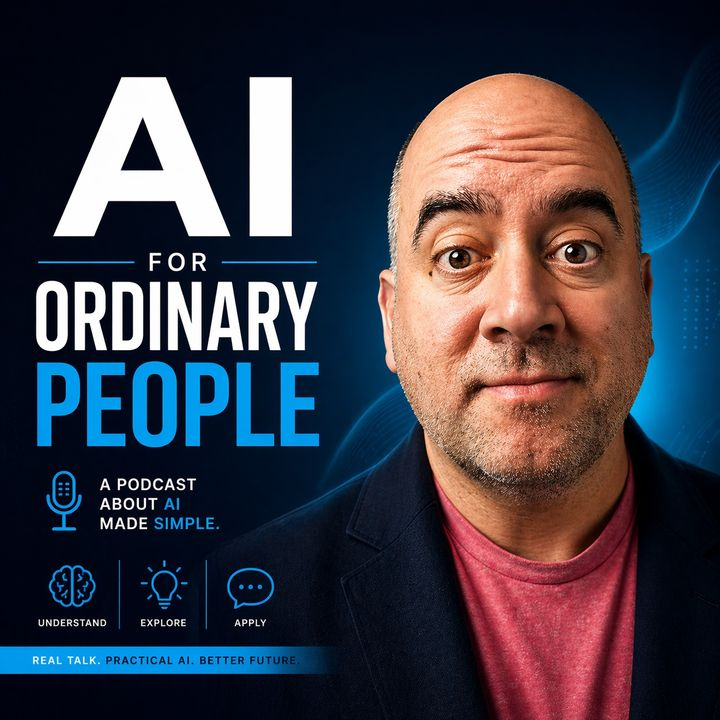
For AI for Ordinary People, the focus is practical AI. A topic needs a connection to someone's everyday life.
An announcement about a new AI feature might lead to an episode about reducing repetitive work. A discussion about AI and education might become a conversation about what parents should ask as their children prepare for college.
Those are possible angles. They still need research and a clear reason for the listener to spend time with them.
For No Sitting on the Sideline Dad, the questions would be different. How does the subject connect to parenting, personal growth, or staying involved when life gets difficult?
The same headline could lead to two very different episodes.
Ask for a short list you can use
A useful first assignment could look like this:
Find three potential episode ideas for AI for Ordinary People. Focus on practical questions from parents, adults over 50, creators, and small business owners. Check my episode list to avoid repeating topics. For each idea, explain the listener's problem, suggest an episode angle, link to reliable sources, and identify anything that still needs checking. Ask me which angle connects with my own experience before drafting a script.
You would need to supply the episode list and any relevant material. OpenAI says Dots can use supported connected plugins within their existing permissions. Connecting a messaging channel alone does not connect your other apps. Source:Meet dots.
Three ideas would make a manageable first test. Each should give you enough information to choose a direction without requiring another hour of sorting.
Keep your part in the conversation
Once an idea catches your attention, the next step could be a question:
“What have you experienced that makes this topic matter to you?”
That answer is where a useful topic starts becoming your episode.
Maybe you have a question you cannot settle yet. Maybe something surprised you. Maybe a guest gave you an answer you want to explore further.
You do not need a dramatic personal story for every episode. You do need a reason to talk about the subject beyond the fact that it appeared in a headline.
AI can help gather material and organize options. Your judgment determines what deserves the microphone.
Make the first test small
OpenAI lists Pro 100, Pro 200, and Pro 500 as eligible for the gradual rollout, with age and regional conditions. Eligibility does not mean the feature will appear immediately. Source:Meet dots.
When access is available, try one clear assignment:three researched ideas for one show.
Read the sources. Check whether the angles fit your audience. Correct anything that feels generic or misses the point. Keep the initial assignment focused on research and drafts for review. OpenAI's controls guide explains that asking for a draft does not authorize sending it. Source:Control your dot.
Then ask yourself a practical question:did this help me choose an episode?
That is a useful way to judge the experiment. A folder full of ideas is only helpful if it gets you closer to a conversation worth recording.

Joe Foley
Joe Foley is the creator of AI for Ordinary People. He helps beginners, parents, creators, and small business owners use AI in simple, practical ways. Joe has been podcasting since 2013 and creates plain-English guides, prompts, and workflows for people who want useful help without tech jargon. His goal is to make AI feel less confusing and more useful for real life, real work, and everyday decisions.