Quick guide
Quick answer
AI is everywhere now. It helps you write, plan, organize, and solve problems. It cuts time out of your day and makes life easier. Many people worry that using AI means they will lose their thinking skills. They fear becoming dependent. They fear losing their...
What you'll find here
- Start With Your Own Thoughts
- Use AI as a Tool, Not a Replacement
- Ask AI to Explain, Not Just Produce
- Keep Your Voice in Every Piece of Content
AI is everywhere now. It helps you write, plan, organize, and solve problems. It cuts time out of your day and makes life easier. Many people worry that using AI means they will lose their thinking skills. They fear becoming dependent. They fear losing their voice.
You do not have to worry about that when you use AI the right way.
You can use AI and stay sharp.
You can save time and still think for yourself.
You can grow your skills instead of losing them.
Here is how to use AI without losing your own mind, your voice, or your judgment.
Start With Your Own Thoughts
One of the best ways to protect your thinking is to think first.
Before you open AI, ask yourself:
- What do I want to say?
- What do I already know?
- What would my own version look like?
Create a rough draft.
Outline your idea.
Speak it out loud.
This keeps your cognitive skills active.
Search engines reward original thinking.
Your voice stays present.
Use AI as a Tool, Not a Replacement
AI should support your ideas, not replace them.
Think of AI as a helper that keeps you on track.
You want AI to:
- Check your work
- Clean up your writing
- Offer alternatives
- Make things faster
You do not want AI making every decision for you.
Search engines look for authenticity.
Your brain needs the work.
Your voice gives your content value.
Ask AI to Explain, Not Just Produce
If you want to stay sharp, lean into deeper questions.
Ask AI:
- Why this works
- How a process works
- Where the weak points are
- What a second point of view might say
This keeps you learning.
It builds real understanding.
It boosts critical thinking, which helps with SEO, writing, and everyday life.
Keep Your Voice in Every Piece of Content
Good SEO content sounds like a real person.
Not a machine.
Here’s how to keep your voice:
- Write something first, even if it is messy.
- Use AI to tighten it.
- Keep what sounds like you.
- Remove anything that sounds flat or generic.
This leads to content that ranks better and feels honest.
Google rewards this.
Readers do too.
Protect the Skills That Matter
If you want to stay strong in certain areas, practice them.
Writing.
Planning.
Problem solving.
Brainstorming.
Do the first pass on your own.
Bring AI in later.
It keeps your brain sharp while still giving you the boost you need to save time.
Build a Healthy AI Routine
A few quick habits keep your mind active:
- Summarize in your own words
- Solve problems before asking AI
- Recall information without searching
- Teach back what you learned
These build memory and understanding.
Search engines tend to reward content that comes from real experience and thought.
A Simple Rule to Keep You Sharp
If AI is doing the thinking for you, stop and reset.
If AI is helping you think better, keep going.
That rule protects your mind and your voice.
AI Should Support Your Identity, Not Replace It
AI can help you create.
It can make planning easier.
It can help you stay consistent when life gets busy.
But you still lead the process.
You still choose the direction.
Your voice still matters most.
When you use AI thoughtfully, you stay in control.
You keep your skills strong.
You grow as a creator.
Try a Five-Minute Check Before You Use the Answer
A helpful habit is to pause before you copy an AI answer into an email, plan, or post. Ask three questions:Is this accurate? Does it fit my situation? Does it sound like me? If the answer is no, change it before you move on.
For important information, use AI to help you understand the question, then check the original source or ask a qualified person. AI is useful for organizing ideas and explaining options. It should not replace your judgment when the stakes are high.
Use AI to Practice, Not Just Finish
Instead of asking AI to do everything, ask it to quiz you, point out gaps in a draft, or give you two possible approaches to compare. That keeps you involved in the work and helps you learn from the result.
The best outcome is simple:AI handles a first pass, and you remain the person who decides what is true, useful, and worth sharing.
nn
Joe Foley
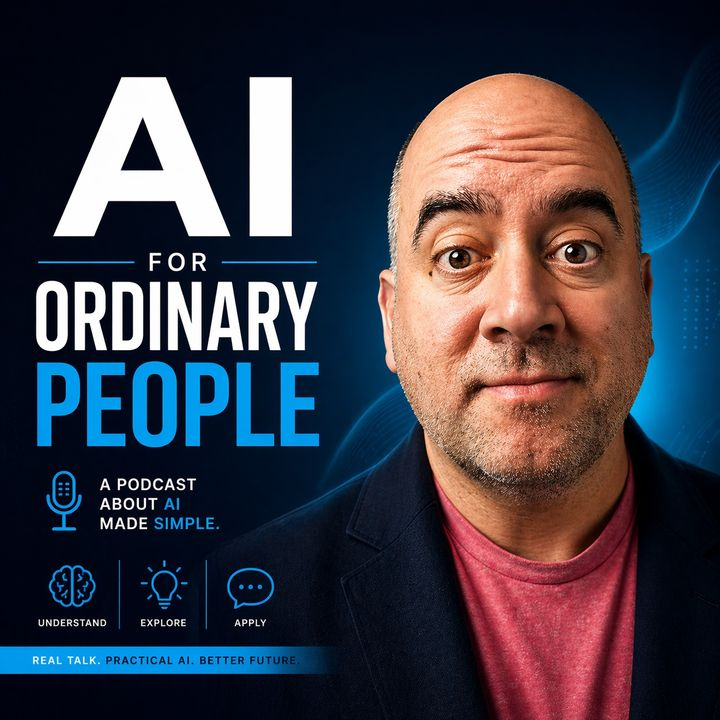
Joe Foley is the creator of AI for Ordinary People. He helps beginners, parents, creators, and small business owners use AI in simple, practical ways. Joe has been podcasting since 2013 and creates plain-English guides, prompts, and workflows for people who want useful help without tech jargon. His goal is to make AI feel less confusing and more useful for real life, real work, and everyday decisions.
Leave a Reply